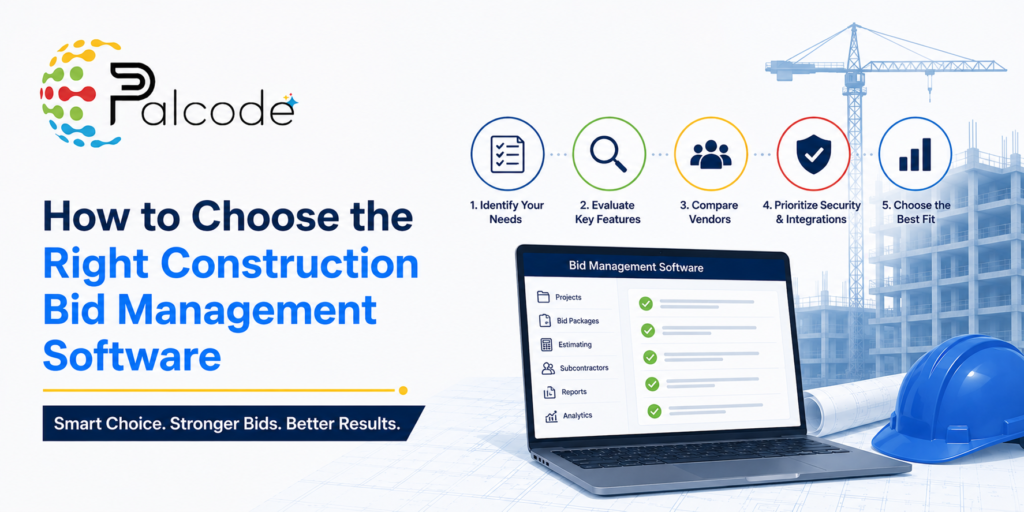
You’re probably not here because you’re new to bidding. You’re here because the spreadsheet-and-email approach has a ceiling, and you’ve hit it. Maybe it’s the volume of invitations, the missed addenda, or the hours spent reconciling subcontractor numbers that should have been comparable but weren’t. Dedicated bid management software for construction exists to solve exactly that, but the platforms differ enough that picking the wrong one creates its own friction.
This comparison cuts through the feature lists and focuses on the criteria that actually matter at purchase time: who each tool is built for, where it genuinely performs, and where it doesn’t.
What Bid Management Software Actually Changes in Your Workflow
The core shift isn’t just digitizing paperwork. It’s replacing the disconnected loop of tracking invitations, addenda, and bid status across email threads with a single system that handles all of it. Real-time material costs and labor rates can flow directly into proposals, which reduces the manual rekeying that causes pricing errors. Teams also gain the ability to track historical bid data over time, identifying patterns that inform go/no-go decisions on future opportunities.
That said, the platforms don’t all deliver these capabilities equally, and the gap is largest between tools designed for large enterprise GCs and those designed for mid-market or specialty contractors. Choosing based on feature count alone tends to backfire. Fit matters more.
How the Top Bid Management Tools for GCs Actually Differ
Six platforms come up consistently in any serious construction bidding software comparison, and each has a distinct profile.
Archdesk: Strongest End-to-End Integration
Archdesk stands out for GCs who want the bid process to connect directly into procurement without a manual handoff. Its bid leveling automation is among the more capable in the field, and the customizable bid templates and portal give teams flexibility that more rigid platforms don’t offer. It’s positioned as the most balanced option across the full bid lifecycle, which makes it a reasonable default for general contractors, specialist contractors, and heavy industry firms that need the estimate-to-procurement flow to hold together.
Procore: Enterprise Standard, with Trade-offs
Procore consistently ranks as the top overall pick in independent reviews, and the network effect is real. Its integrated Planroom lets GCs assemble and distribute bid packages quickly while automatically logging who viewed and submitted them. For large-scale GCs managing complex projects, that visibility is valuable. The trade-off is cost and overhead. Procore’s all-in-one suite is designed for organizations that can staff it, and smaller teams often find themselves paying for capabilities they’ll never touch. If you’re evaluating Procore alternatives for small GCs, it’s worth pressure-testing whether the platform’s scale actually fits your bid volume before committing.
Read More : Bid Leveling Template: What It Is and How to Build One That Works
Autodesk Construction Cloud (BuildingConnected Pro): Network First
BuildingConnected’s primary advantage is reach. It runs the largest contractor network available, which matters most when you’re managing hundreds of bid invitations simultaneously and need qualified coverage across trades. The precon CRM and deep Autodesk integration are genuinely useful if your team already operates in the Autodesk ecosystem. Outside of that context, the value proposition narrows considerably. It’s an enterprise tool for large GCs with established subcontractor outreach needs, not a fit for teams managing tighter bid cycles.
Buildxact: AI-Driven, Good for Technical Bid Creation
Buildxact leans into AI for takeoff speed, subcontractor communication, and automatic bid comparison organization. If the bottleneck on your team is the technical side of building the bid itself rather than managing the invite and leveling process, Buildxact addresses that directly. It’s worth evaluating for firms whose estimators spend a disproportionate amount of time on quantity work before they ever get to comparing numbers.
PlanHub: Built for Subcontractors, Not GCs
PlanHub connects contractors to a network of over 32,000 GCs and matches active projects to a sub’s trade or region. That’s a specific and useful function, but it’s fundamentally a lead-generation and bid-submission tool for subcontractors and suppliers. GCs evaluating bid tracking software for construction from the invitation side won’t find much here beyond a channel to reach subs.
ConstructConnect: Takeoff and Preconstruction in One
ConstructConnect merges bid solicitation, digital takeoff, and estimating into a single cloud platform. The digital plan marking and quantity calculation capabilities make it relevant for GCs who want to handle preconstruction intelligence in one place. It’s a strong option when the team needs takeoff capability alongside bid management rather than buying separate tools for each.
Which Platform Fits Which Team
The research makes this fairly direct. Large enterprise GCs with high bid volume and extensive subcontractor networks are best served by Procore or BuildingConnected. Firms that prioritize an integrated flow from estimate through procurement tend to get more consistent value from Archdesk. Subcontractors looking for project leads belong on PlanHub. Small to mid-sized GCs, roughly 10 to 500 employees, have options like Contractor Foreman that are designed for their scale. Residential builders fit Buildertrend’s workflow better than any of the enterprise platforms.
The part most teams underestimate is setup effort. A platform with the right features but a six-week onboarding runway creates real problems in an active bid season. Ask vendors specifically how long it typically takes to get a team fully operational, not just licensed.
Where AI and Automation Are Headed in Construction Bidding
AI capabilities in bid management software for construction are shifting from novelty to baseline expectation. Buildxact already uses AI to automate takeoff and organize bid comparisons. Bid leveling automation, once a manual process that estimators handled in spreadsheets, is now a standard feature claim across the category.
The practical adoption reality is more measured than the marketing. AI-assisted bid leveling, for instance, is most useful when the underlying subcontractor documents are reasonably structured. Poorly formatted PDFs and inconsistent scope language still create friction that automation can’t fully absorb. The better tools handle document parsing with some tolerance for variation, but teams should test that capability against their actual document types before assuming it works cleanly.
Longer term, the platforms that build genuine intelligence into scope gap detection and bid coverage analysis will pull ahead. Identifying a missing trade or an unaddressed spec item before award is worth more than any reporting dashboard, and that’s where the more capable tools are heading. For a closer look at how AI is changing the leveling side specifically, the detail on bid leveling software for construction is worth reviewing alongside this comparison.
Buying Criteria Worth Prioritizing
When you’re narrowing the field, a few criteria separate platforms that look similar on paper:
- Data accuracy and how the tool handles inconsistent subcontractor formatting
- Subcontractor network size and trade coverage in your specific market
- How tightly the bid workflow connects to your estimating and procurement systems
- Actual time-to-operational, not just licensing speed
- Whether the pricing model scales with bid volume or locks you into a flat seat cost that doesn’t reflect how your team actually works
Platform Best For Key Strength Main Limitation Pricing Model Palcode GCs wanting AI-powered end-to-end bid workflow automation AI workers automate ITBs, bid leveling, scope sheets, and vendor onboarding with minimal manual coordination Purpose-built for preconstruction; not a full project management suite Contact vendor. 30-day free trial Archdesk GCs and specialist contractors wanting end-to-end flow Bid leveling automation and estimate-to-procurement integration Less name recognition than Procore or Autodesk in enterprise organizations Custom (contact vendor) Procore Large enterprise GCs managing complex, high-volume projects Integrated Planroom with real-time bid tracking and submission visibility Cost and complexity can overwhelm smaller teams Module-based, enterprise pricing Autodesk BuildingConnected Pro Large GCs with extensive subcontractor networks Largest contractor network available for bid invitations Best value only inside the Autodesk ecosystem Subscription, enterprise tier Buildxact Firms prioritizing AI-assisted takeoff and bid creation AI-driven takeoff speed and automated bid comparison organization Less focused on large-network subcontractor management Tiered subscription PlanHub Subcontractors and suppliers seeking project leads Network of 32,000+ GCs for project matching by trade and region Not designed for GC-side bid invitation management Free and paid tiers ConstructConnect GCs needing takeoff and bid solicitation in one platform Digital plan marking, quantity calculation, and preconstruction suite combined Can be heavier than needed if takeoff is not a bottleneck Subscription, contact vendor
Avoid letting feature lists drive the final decision. A tool with 40 features your team won’t use isn’t more valuable than one with 15 that fit your workflow exactly. The teams that get the most out of these platforms are the ones that matched the software to how they actually bid, not to how they theoretically might bid someday.
Frequently Asked Questions
How much does bid management software for construction typically cost?
Enterprise platforms like Procore and Autodesk BuildingConnected run on module-based or tiered subscription pricing that usually requires a direct quote, often starting in the thousands per month for a full team. Mid-market tools tend to offer more transparent tiered pricing. The more important cost question is whether the pricing model scales with bid volume or charges per seat, since that determines whether the cost stays manageable as your pipeline grows.
What’s the difference between bid management software and estimating software?
Bid management software handles the process of finding opportunities, sending invitations, tracking submissions, and comparing subcontractor responses. Estimating software focuses on calculating project costs from quantities and unit prices. Some platforms, like ConstructConnect and Buildxact, combine both functions, but most tools specialize in one side and integrate with the other rather than replacing it.
How long does it take to get a team up and running on a new bid management platform?
It varies more than vendors tend to admit upfront. Simpler platforms can have a team operational in a week or two. Enterprise platforms like Procore often involve a structured onboarding process that runs four to six weeks before the team is using it consistently. This matters a lot if you’re mid-bid-season when you switch, so timing the rollout to a slower period is worth planning for.
Can these platforms handle unstructured or inconsistently formatted subcontractor bids?
Most platforms claim document parsing capability, but performance varies significantly depending on how well-structured the incoming PDFs are. AI-assisted leveling works best when subcontractors use consistent scope language and formatting. Poorly organized submissions still require manual intervention on most platforms. Testing with a real sample of your actual incoming bid documents is the most reliable way to assess this before committing.
Is there a good option for subcontractors specifically, or are these tools built for GCs?
PlanHub is the most purpose-built option for subcontractors, connecting subs to a network of over 32,000 GCs and matching projects by trade and region. Most of the other platforms in this category are designed primarily from the GC’s perspective, managing the invitation and leveling process rather than helping a sub find and respond to work.
See How AI Handles the Bid Review Work Your Team Shouldn’t Be Doing Manually
If your estimators are still spending hours normalizing subcontractor bids in spreadsheets or chasing down scope gaps before award, that’s a process problem with a concrete solution. Palcode.ai automates bid leveling, scope sheet generation, and coverage gap detection directly from the documents you’re already working with. Book a demo call to see how it fits your current bid workflow.
About the Author
Shikha is a Senior Product Growth Marketer at palcode.ai, where she focuses on driving product adoption and improving user engagement through strategic, data-driven marketing. She contributes to product growth initiatives through market research, user behavior analysis, growth experimentation, and the development of best practices that help teams improve customer experience and product performance. Her work focuses on turning complex product concepts into actionable insights that support adoption, retention, and long-term growth. Explore More Blogs Here.