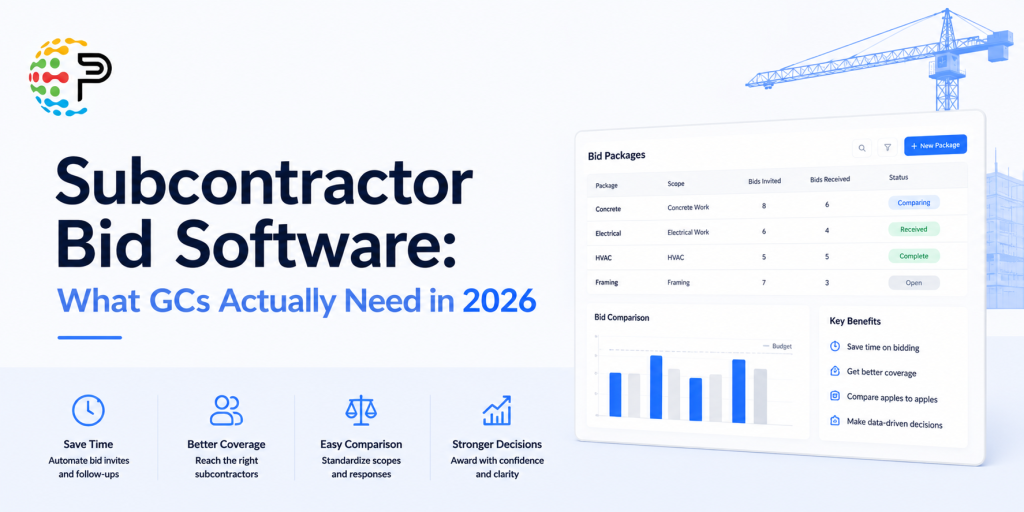
If you’ve ever hit bid day with a gap in your electrical coverage because a sub never confirmed and nobody followed up you already understand the problem this software is supposed to solve.
The honest version of where most GC teams stand in 2026: a shared inbox, a color-coded spreadsheet, and a sub contact list that gets updated when someone remembers to do it. Meanwhile, the market has a dozen platforms claiming they’ve solved sub procurement. Some of them have. Most haven’t at least not for your workflow, your market, and your team size.
This guide is for estimators and preconstruction managers who are actively evaluating subcontractor bid software and want a clear-eyed look at what matters, what doesn’t, and what questions to ask before you sign anything.
What Subcontractor Bid Software Actually Does
Before comparing platforms, it helps to be precise about scope because vendors blur this constantly.
Estimating software — Bluebeam, Stack, DESTINI is where you build your own numbers: quantities off drawings, unit costs, labor burden, markup. That’s not what this article is about.
Subcontractor bid management software: It handles the procurement side of preconstruction:
- Organizing and maintaining your sub database by trade and geography
- Building and distributing Invitations to Bid (ITBs) with plans, specs, and scope attachments
- Tracking who opened the package, who confirmed, and who went silent
- Managing addenda and ensuring subs have current documents
- Collecting proposals and leveling them side by side before you write your GC number
Some platforms combine both estimating and bid management. Most are built around one or the other and the ones that claim to do both usually do one of them less well.
The two phases where most teams lose time are: (1) sub outreach and coverage confirmation before bid day, and (2) comparing proposals apples-to-apples after they come in. Most platforms are strong at one phase; fewer do both well.
The Five Criteria That Actually Matter
1. Sub Network Coverage in Your Market
Total network size is a vanity number. What you need to know is verified coverage in your specific trades and zip codes. Ask the vendor to pull a list count for the exact trades and geographies you bid before you commit. A platform claiming 1.5 million subs means nothing if half those records are outdated contacts in markets you don’t operate in.
BuildingConnected maintains the largest connected network of GCs and specialty contractors in North America, which is why it’s the default for enterprise GCs. PlanHub connects subcontractors with 32,000+ general contractors posting real projects daily, with subs able to search by CSI code, geography, or specialty. Smaller platforms may serve your region better if the big networks have thin local coverage.
2. ITB Distribution and Tracking
The ITB workflow is table stakes, but the execution varies significantly. You need a platform that lets you create scoped packages by trade, attach current drawings and specs, track open rates and confirmations, and manage addenda automatically.
SmartBid (by ConstructConnect) sends bid invitations to selected subs and tracks responses, addenda acknowledgments, and bid statuses all within the platform. SmartBid’s primary strengths are its user-friendly interface and Procore integration. Its primary limitations are a smaller sub network than BuildingConnected and limited bid analysis post-receipt.
One thing to pressure-test: whether the ITB goes out as a generic mass invitation or as a targeted, personalized outreach. Generic mass invitations mean lower response rates which means more phone calls chasing coverage on bid day.
3. Bid Leveling and Scope Analysis
This is where most platforms fall short. Getting proposals back isn’t the hard part normalizing them is. Scope inclusions and exclusions, clarification language, alternates, allowances a 6% difference in sub quotes can evaporate instantly once you reconcile scope gaps.
Advanced features that separate top platforms in 2026 include AI-powered bid matching, automated compliance checking against bid requirements, addenda tracking with instant notifications, integrated cost estimating tools, and historical bid data for competitive analysis.
If a platform’s bid leveling module is basically a glorified spreadsheet, factor that into your evaluation. True scope gap analysis identifying what one sub included that another left out still requires either dedicated tooling or manual estimator time.
4. Prequalification and Compliance Integration
For GCs who run complex commercial or public work, prequalification isn’t optional. You need to know before bid day whether your electrical sub has current COI, the right bonding capacity, and a clean safety record. Pulling that together manually mid-bid cycle costs real time.
BuildingConnected’s prequalification module helps GCs screen subcontractors by safety, financials, and certifications, making compliance less painful. SmartBid allows GCs to maintain a database of subs and prequalify them by criteria like trade, project history, and safety records ensuring you invite only qualified subs to bid.
For teams who want prequalification, COI tracking, and bid management in one workflow rather than three disconnected tools, that integration is worth paying for.
5. Integrations With Your Existing Stack
A bid management platform that doesn’t talk to your estimating or project management software creates more work, not less. BuildingConnected’s integration with Autodesk Docs and Revit keeps drawings current and accessible, and it’s robust for firms already using Autodesk Construction Cloud. SmartBid’s Procore integration is its most compelling differentiator.
If you’re running Procore for project delivery, that integration chain matters. If you’re not in those ecosystems, it’s less relevant and shouldn’t be a reason to choose a platform that otherwise doesn’t fit.
Learn More : Bidding and Estimating Software: The Complete Breakdown for Contractors
Platform Comparison: What GCs Are Actually Using in 2026
| Platform | Best Fit | Network Size | Bid Leveling | Prequalification | Approx. Pricing |
|---|---|---|---|---|---|
| BuildingConnected | Enterprise GCs / Autodesk users | Largest in North America | Basic | Yes | ~$3,500–$7,000/yr |
| SmartBid | Procore-integrated GCs | Mid-tier | Limited | Yes | ~$250–$1,500/mo |
| PlanHub | Cost-conscious GCs, sub marketplace | 32,000+ GC network | Basic | Limited | $1,999–$4,369/yr |
| Palcode.ai | Mid-market GCs needing AI-powered precon | Growing | AI-driven bid leveling | Yes (COI + compliance) | Contact for pricing |
| Downtobid | GCs focused on faster ITB creation | Developing | AI plan analysis | Limited | Free / $150–$500/mo |
The Gap Most Platforms Don’t Fill
Here’s what the feature sheets won’t tell you: the gap most bid distribution platforms don’t fill AI-powered scope analysis after proposals come in requires a separate tool regardless of which distribution platform is in use.
That’s the actual frontier in subcontractor bid management right now. Getting ITBs out and tracking responses is a solved problem. What still breaks down for most GC teams is the post-receipt phase: pulling scope detail out of 8 sub proposals, reconciling inclusions and exclusions, and surfacing the true apples-to-apples comparison before your bid goes out the door.
Platforms like Palcode.ai are designed specifically for this workflow combining ITB management, subcontractor prequalification, AI-assisted bid leveling, and COI tracking in one platform built for commercial GC preconstruction teams. Rather than stitching together a separate distribution tool, a prequalification database, and a bid leveling spreadsheet, the goal is to run that entire workflow in one place.
Read More : Contractor Bidding Software: What to Look For Before You Buy
What to Ask Before You Buy
If you’re in an active evaluation, these are the questions worth asking every vendor:
- How many verified subcontractor contacts exist in my specific trades and zip codes — not the total network number?
- Can I see a live demo of the bid leveling workflow, not just ITB distribution?
- How does the platform handle addenda after ITBs are sent?
- Does prequalification data (COI, safety records) live inside the platform or require a third-party integration?
- What does implementation actually look like and what’s the realistic timeline to full adoption?
The platform that can answer all five with specifics, not talking points, deserves serious consideration.
Frequently Asked Questions
What’s the difference between bid management software and estimating software?
They solve different problems. Estimating software like Bluebeam, Stack, or DESTINI is used to build your own cost numbers from quantities and unit costs. Bid management software handles sub procurement: sending ITBs, tracking responses, collecting proposals, and leveling quotes. Some platforms attempt both; most are built around one or the other.
Does subcontractor bid software replace manual follow-up on bid day?
It reduces it significantly but rarely eliminates it. The best platforms automate confirmation tracking and follow-up reminders but GC estimators still typically make phone calls on complex bids, especially for critical trades. The goal is fewer calls, not zero.
What size GC team typically benefits most from bid management software?
Any GC running more than 3–5 active bids per month will see ROI. Teams with a dedicated estimator or preconstruction manager are the sweet spot they have enough bid volume to justify the setup investment and enough complexity to benefit from organized sub tracking and bid leveling.
How important is sub network size when evaluating platforms?
Network size matters but local, trade-specific accuracy matters more. Always ask a vendor for verified contact counts in your actual geography and trades before signing. A platform with 500,000 contacts in your market is more valuable than one claiming 2 million globally with thin local coverage.
Can subcontractors use these platforms for free?
Often yes, on the receive side. Most major platforms BuildingConnected, SmartBid allow subs to receive ITBs, download documents, and submit proposals without a paid subscription. GCs pay for the distribution and management functionality.
Ready to See What AI-Powered Bid Management Looks Like?
If your preconstruction team is still leveling bids in spreadsheets and chasing sub coverage the day before bid day, the workflow exists to fix that it just requires the right tool.
Palcode.ai is built for commercial GCs who want ITB management, subcontractor prequalification, AI-assisted bid leveling, and COI compliance in one platform. No stitching together three tools. No manual scope reconciliation at 10pm before a bid deadline. Book a demo and see how the bid management workflow looks when it actually works end-to-end.
About the Author
Mohit Mohan is the founder of Palcode.ai and a builder of AI-first systems for commercial construction workflows. He works closely with preconstruction leaders to translate real field constraints coverage gaps, bid volatility, scope ambiguity, compliance friction, and estimator capacity limits into repeatable, governed operating workflows that scale across projects and teams.