
A small general contractor adopted AI-powered drawing analysis and construction risk management software to streamline MEP takeoffs for a medical office building project. By moving from manual estimating workflows to AI-assisted digital processes, the preconstruction team reduced estimation time by 15%, improved takeoff accuracy, and identified critical drawing discrepancies before they turned into costly project risks and change orders.
The Challenge
Preconstruction is the critical planning phase that sets the foundation for successful construction projects. For small and mid-sized contractors, this phase presents unique challenges due to limited staff resources and the need to balance multiple responsibilities. The preconstruction process encompasses several key activities including scope definition, cost estimation, scheduling, bidding, subcontractor selection, and risk management.
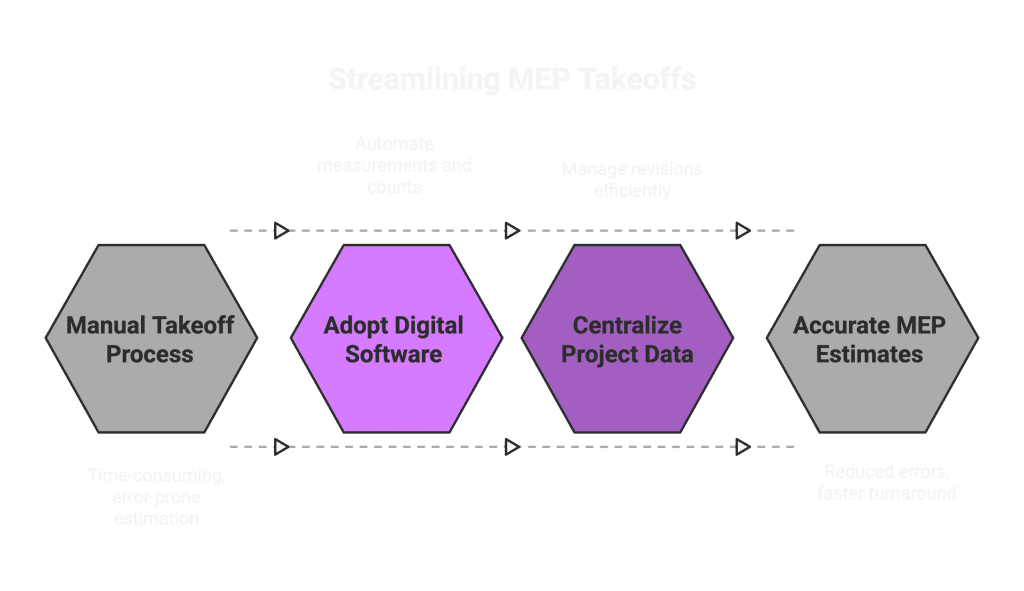
Traditional manual takeoff methods represent a significant burden for preconstruction teams. These processes involve measuring materials by hand from paper blueprints, which is inherently time-consuming and error-prone, particularly for complex projects.
The manual process presents several specific challenges:
- Time inefficiency: Manual takeoffs require substantial time investment, with estimators spending hours measuring and calculating quantities from physical drawings. For small teams already stretched thin across multiple responsibilities, this time constraint severely limits productivity.
- Error susceptibility: Human errors in manual takeoffs occur frequently through misreading scales, addition mistakes, or overlooking components. These errors can cascade through the estimation process, ultimately affecting project budgets and timelines.
- Limited collaboration: Paper-based systems make it difficult for multiple team members to work simultaneously on the same takeoff, creating bottlenecks in the workflow.
- Storage and retrieval issues: Physical drawings and manual takeoff records are cumbersome to store and difficult to reference efficiently for future projects. This makes it challenging to build upon past experience or quickly access historical data.
Solution
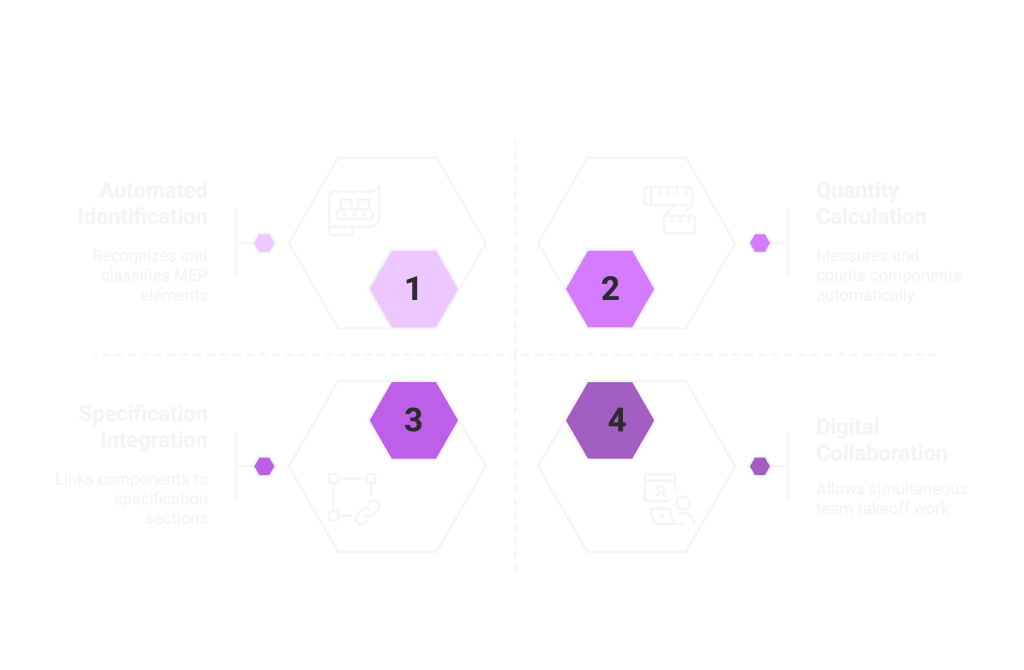
The solution featured:
- Automated component identification that could recognize and classify MEP elements from digital drawings
- Quantity calculation tools that automatically measured and counted components
- Specification integration that linked identified components to relevant specification sections
- Digital collaboration features that allowed team members to work on takeoffs simultaneously
Unlike generic takeoff software, the AI-powered solution was trained specifically on MEP systems, allowing it to recognize complex components like air handling units, ductwork transitions, and specialized piping systems.
Implementation Process
The implementation followed a phased approach:
- Digital drawing setup: Converting paper blueprints to digital formats and organizing them in the system
- Initial training: Learning the core functionality and MEP-specific features
- Supervised takeoff: Completing the first few takeoffs with support from the solution provider
- Process integration: Incorporating the digital takeoffs into the existing preconstruction workflow
Results and Benefits
- Time reduction: MEP takeoff time decreased by 15% compared to the previous manual process. As experience with the system grew, further time savings on subsequent projects were projected.
- Accuracy enhancement: The AI-powered system identified 8 discrepancies between the drawings and specifications that would likely have been missed using manual methods. These included mismatched duct sizes, inconsistent fixture specifications, and contradictory valve requirements.
- Improved change management: When a significant HVAC design change occurred midway through the project, the takeoff was updated in hours rather than days.
- Capacity expansion: The efficiency gains allowed the small team to bid on one additional project per month, representing a significant increase in potential revenue generation.
The most impressive outcome wasn’t just the time savings but how the system helped identify issues early in the process. The technology found several conflicts between the drawings and specifications that would have caused problems during construction
Looking Ahead
With this initial success, the contractor is now expanding their use of the AI-powered solution to all projects, regardless of size. They’ve established standardized workflows for handling MEP takeoffs and are creating templates for common components they frequently encounter.
For small preconstruction teams, this technology proves transformative. It enables more accurate estimates, more effective response to changes, and increased workload capacity without additional staffing.
The small preconstruction team that was once overwhelmed by complex MEP drawings is now positioned to deliver increasingly accurate estimates while growing their project portfolio—proving that with the right digital tools, even limited resources can achieve exceptional results.
FAQ
What is MEP takeoff software in construction?
MEP takeoff software helps contractors measure and estimate mechanical, electrical, and plumbing materials directly from construction drawings, improving speed and accuracy during preconstruction.
How can small general contractors reduce MEP takeoff time?
Small GCs can reduce takeoff time by using AI-powered estimating and quantity takeoff software to automate measurements, streamline workflows, and minimize manual calculations.
Does AI takeoff software improve estimate accuracy?
Yes. AI takeoff software reduces human error, identifies missing scope items, and helps contractors create more accurate and consistent estimates.
What are the benefits of automating MEP takeoffs?
Automating MEP takeoffs helps contractors save estimator time, increase bid capacity, improve project turnaround times, and reduce costly estimation mistakes.
Is construction takeoff software worth it for small contractors?
For many small contractors, takeoff software improves efficiency and allows teams to bid more projects without hiring additional estimators, making it a cost-effective investment.